Walk the perimeter of your house this weekend and look at the siding directly below your gutters.
If you see dark vertical streaks running down the wall, your gutters are keeping notes — and most homeowners read those notes wrong. You look at the stripes and think my gutters need cleaning. Maybe they do. But the stripes are also a record of seam condition, hanger placement, and overflow frequency. Cleaning alone won't fix any of those.
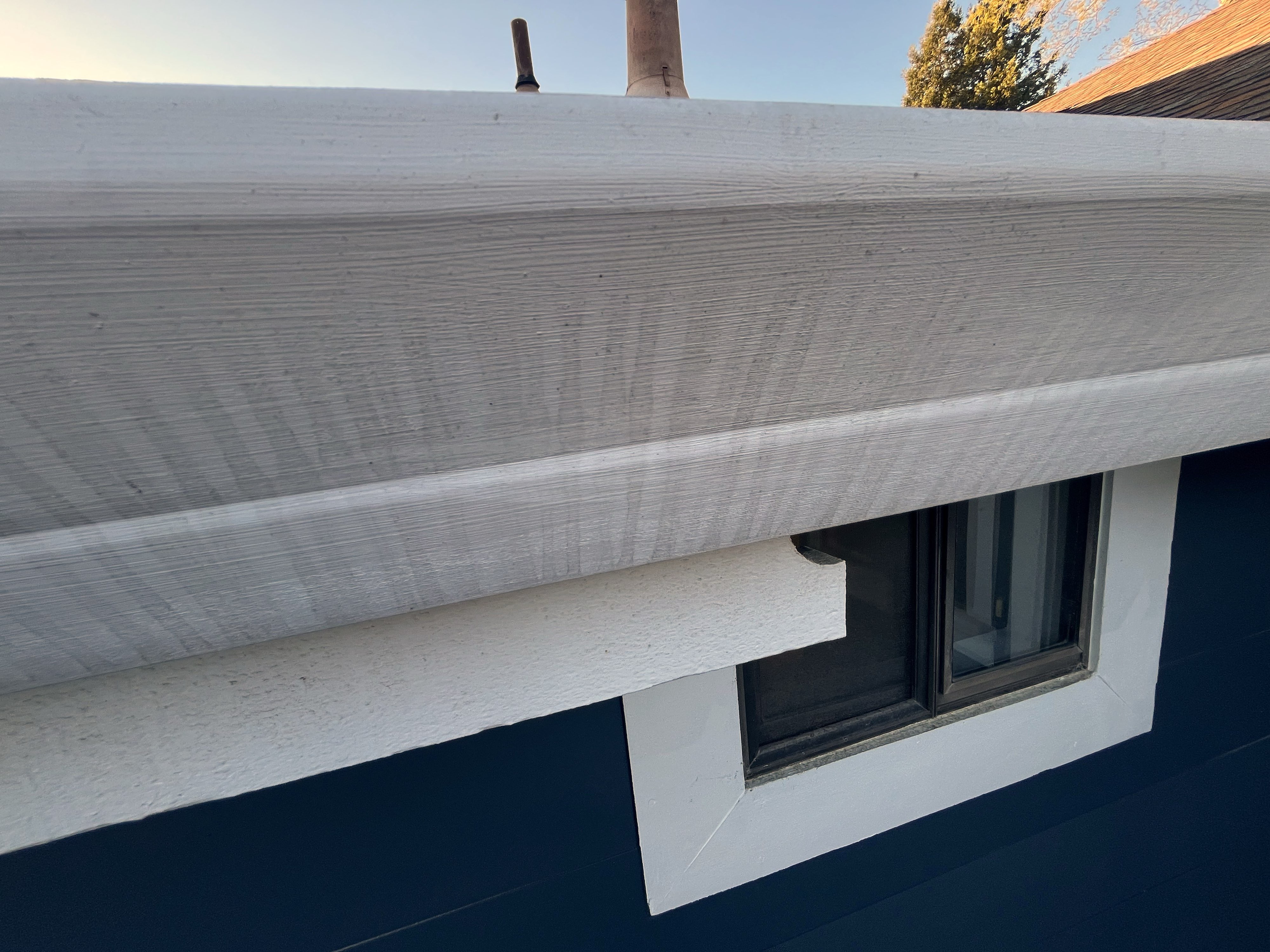
That gutter — and yours — has been keeping the same kind of record. Knowing what to look for is where it starts.
Gray Streaks Centered Between Hangers
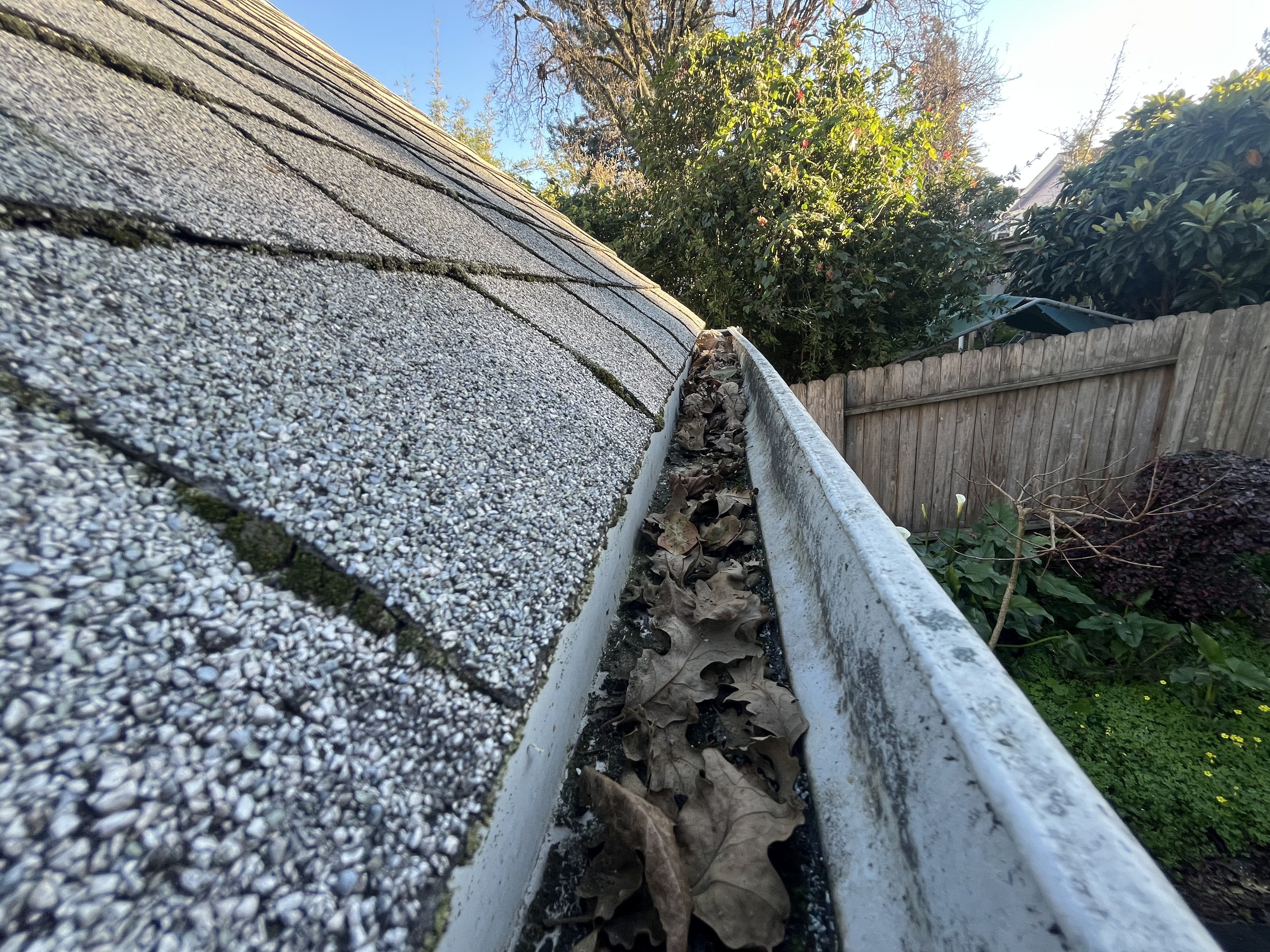
Gray-brown vertical streaks running down the front face of your gutter, evenly spaced between the brackets. The stripes start at the top edge of the gutter and run two to four feet down the siding below, sometimes longer.
This is overflow. Your gutter filled past capacity, water sheeted over the front lip instead of going through the drain, and ran down the siding repeatedly until the stain set in. The position is the giveaway — the streaks are centered between the hanger points because that is where the gutter's structural midspan sags slightly under load and the lip dips just enough to release water.
Field inspectors call these tiger stripes. Your house has been wearing them for as long as the overflow has been routine. The geometry that produces them — pitch, hanger spacing, capacity versus rainfall rate — is the underlying cause. Cleaning the channel buys time. It does not change the geometry.
Brown Streaks That Wrap the Bottom Edge
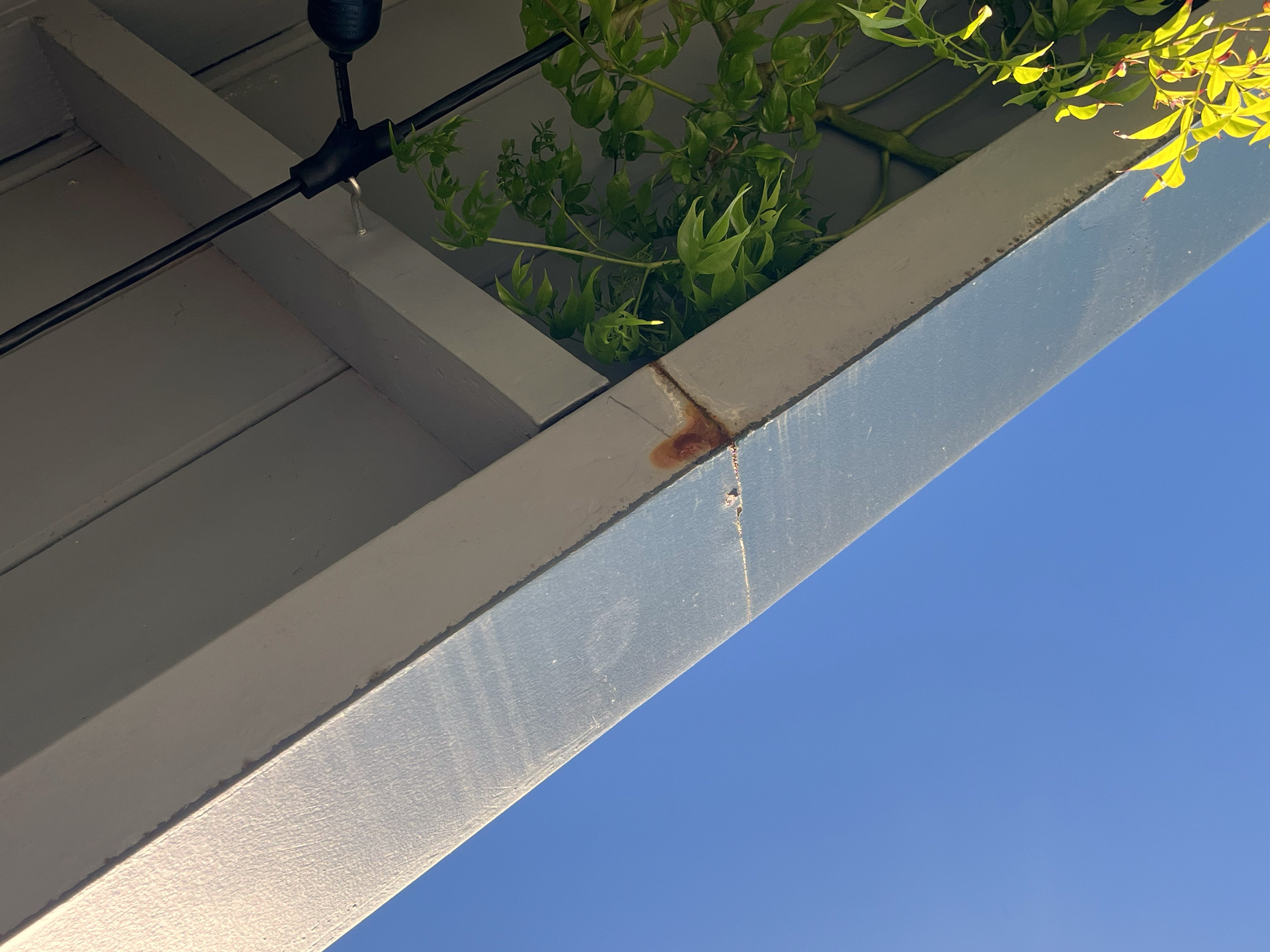
Darker, narrower streaks — brown or rust-toned — that originate not from the front lip but from the bottom edge of the gutter, sometimes wrapping around the underside before they hit the siding.
This is a rear-seam leak. Water that should have left through the downspout found its way through a failed seam at the back of the gutter, ran down the back of the channel, wrapped around the bottom curve, and appeared on the siding looking like it came from nowhere obvious.
Rear-seam leaks do not get cleaned away. The seam keeps leaking until the seam gets sealed. Cleaning the channel changes nothing about the seam. The stain is still being added to with every storm — and what is happening behind the gutter, on the fascia board, is being added to at the same time.
One Streak in One Spot
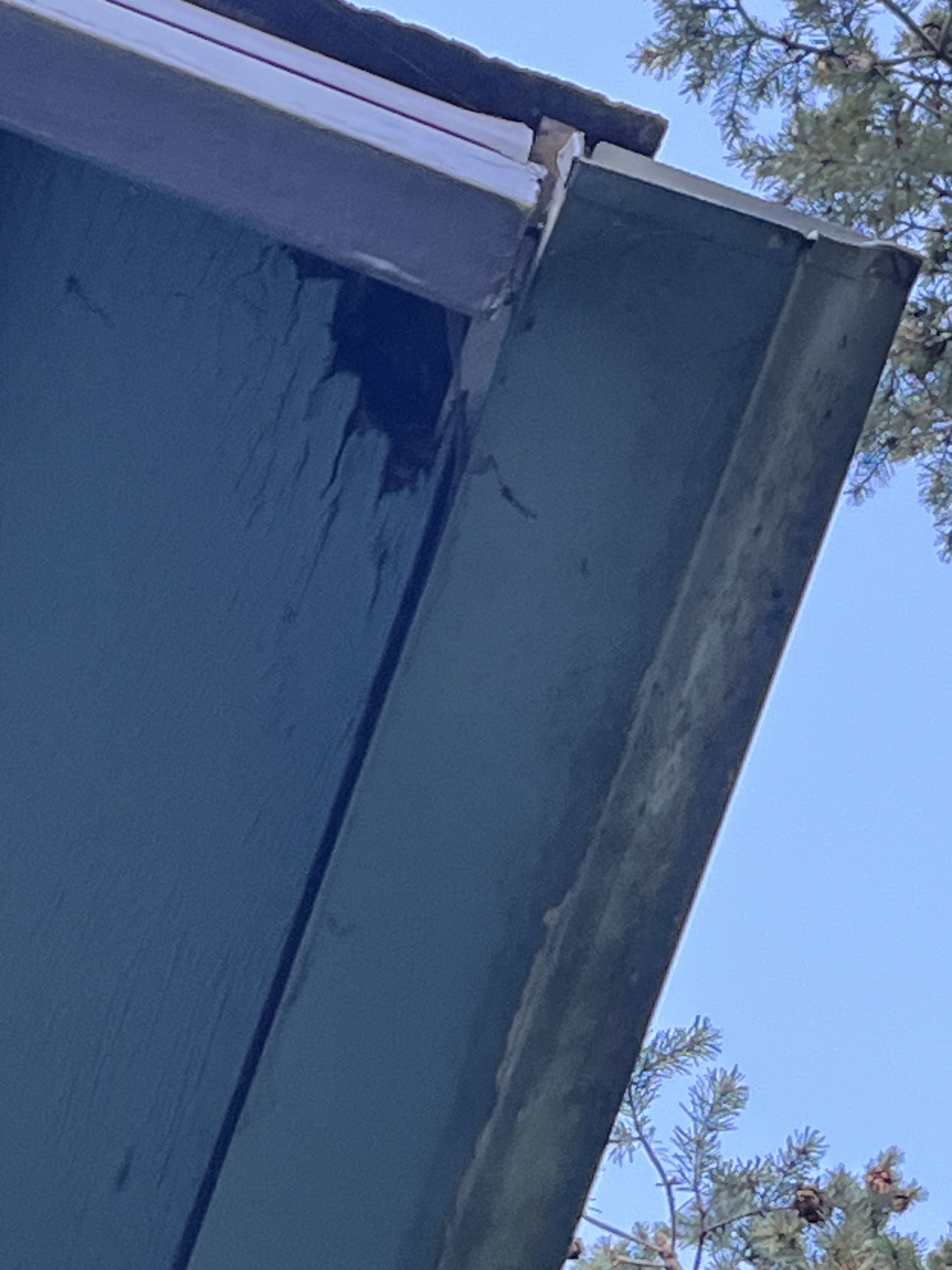
A single dark streak running down the siding at exactly one location — almost always at a corner, an end cap, or directly above a downspout outlet.
Localized streaks mean a localized blockage. The gutter is clearing most of its run except one specific point where debris has packed tight enough to redirect water out of the channel at that spot, every storm, the same way. Corners are the most common location because debris pivots there and stops moving. End caps are second most common because the gutter terminates there and nothing pushes the debris past.
When a single streak grows over time without spreading laterally, you are watching the same blockage reset itself the same way for years. Of the three patterns, this one is the most likely to be resolved by cleaning — but only if the cleaning reaches the corner geometry, which the straight-run pass usually misses.
Orange Streaks From Every Screw
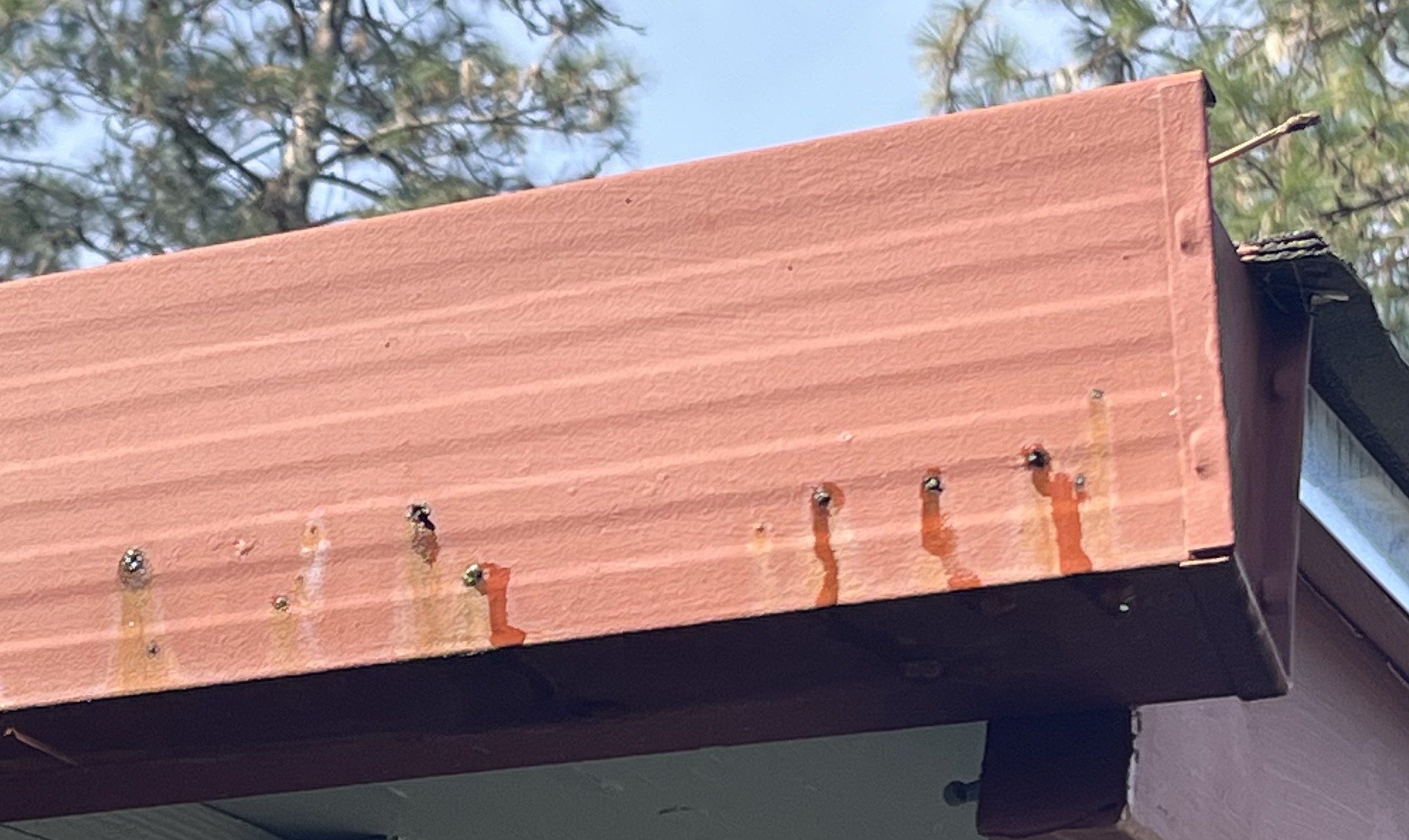
There is a fourth streak pattern that is not about water at all — orange or rust-colored streaks running from the heads of the screws holding your gutter to the fascia. Most homeowners read this one as the gutter rusting and failing. It usually is not.
Your gutter is most likely aluminum or coated steel. The mounting screws are usually steel, and many of them were not specified to last as long as the gutter they were holding up. They corrode at the head, the rust runs down the front of the gutter when it rains, and you see the bleed pattern even when the gutter behind it is fine.
This is a hardware problem, not a gutter problem. But it is worth recognizing because most homeowners read it wrong — and replacing the gutter does not solve a problem that lives in the screws.
Why The Stripes Come Back After You Clean
The reason most homeowners read the stripes wrong is that the obvious response — cleaning the gutter — sometimes does help, especially with Pattern Three. But Patterns One and Two are not debris problems.
Pattern One is geometry: hanger spacing, gutter pitch, lip height versus channel volume during peak rainfall. You can clean a gutter that is geometrically wrong and it will still overflow at capacity in the next hard rain.
Pattern Two is a seam: the original installation, the wear of time, the contraction and expansion of metal across hot summers and wet winters. The seam fails slowly and stays failed. Cleaning the channel does not approach the seam.
This is why the same streaks come back the same season after a cleaning. The cleaning addressed what could be reached. The geometry and the seams are still where they were.
Reading what is on your siding is the diagnostic. The repair that follows depends on which pattern showed up. The wrong fix on the right symptom is one of the most common ways gutter problems become fascia and foundation problems.
Stripes Tell You There's a Problem.
The Ladder Tells You Which One.
A free inspection reads the stripes from above and below — geometry, seams, fasteners, downspouts — and you get a written report the same day that names the pattern, the cause, and what the fix actually requires.
Schedule a Free InspectionThe stripes on your siding have been there longer than most homeowners notice. Once you see them, you cannot un-see them — and the next storm becomes a chance to test what you just read.
Your gutters have been keeping notes. The stripes are how they show you what they wrote.