The first time you look into your own gutter, you do not expect to find biology.
You expect debris — leaves, twigs, the slow march of decomposition. And the debris is there. But across fifteen hundred inspections in five counties, the same regular cast of tenants shows up in NorCal gutters with predictable seasonality. Some of them you would recognize. Some of them you would not.
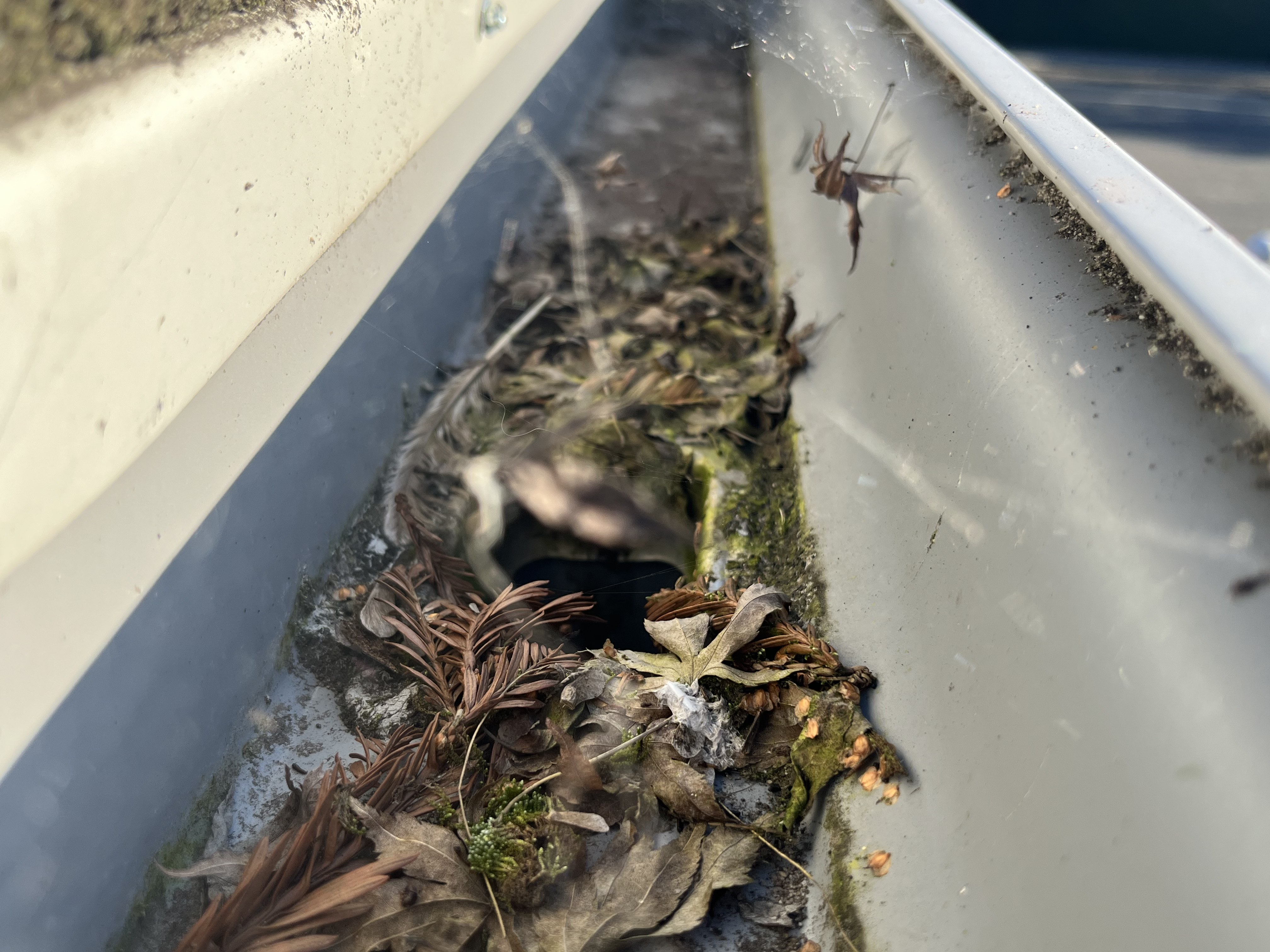
What follows is what gets seen, in roughly the order it appears across the seasons. Some tenants are evidence of a problem. Some are evidence of a problem that resolved itself. Knowing which is which is the field work.
Spiders
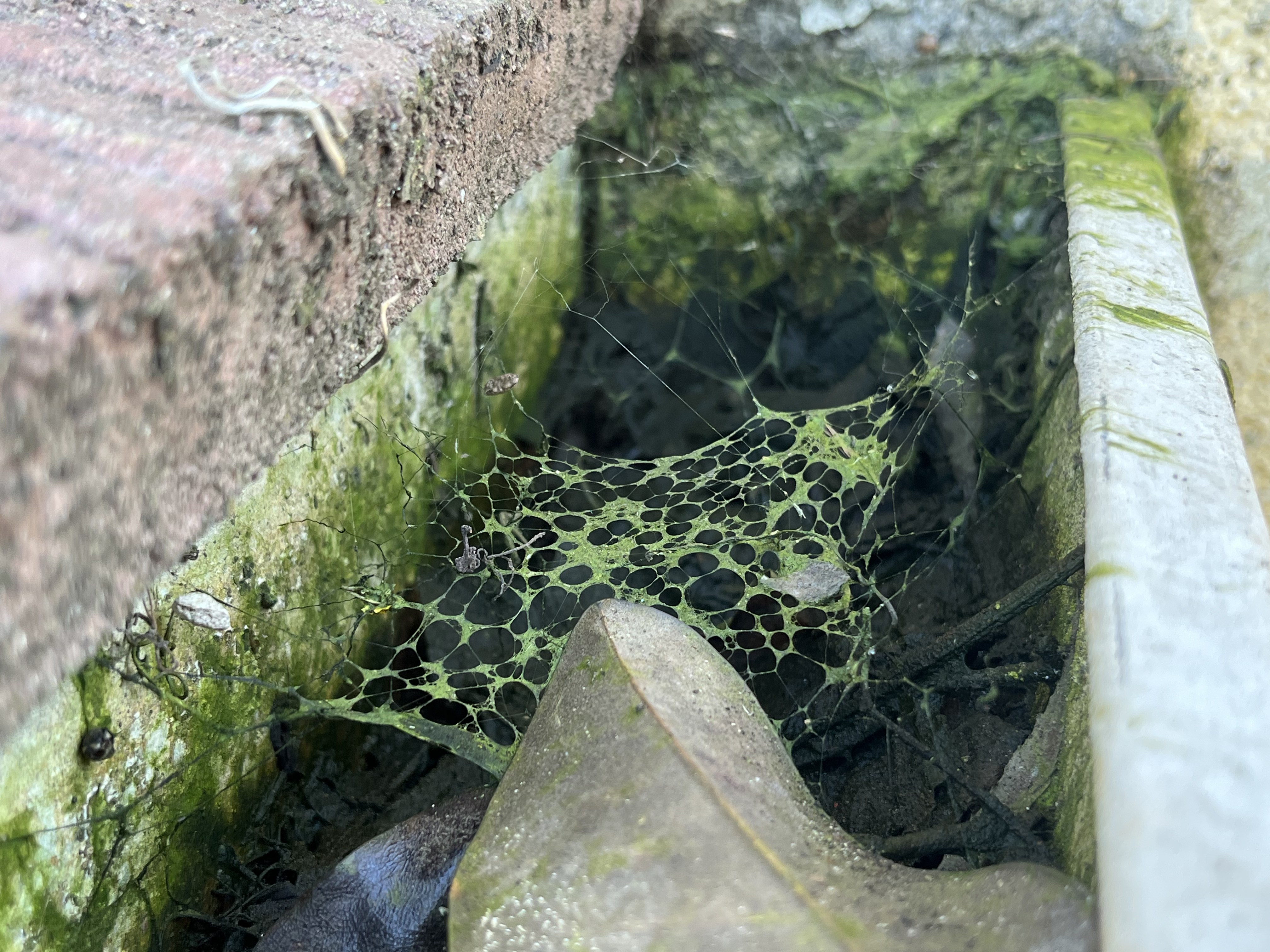
Spiders are the most common tenant of a Northern California gutter and the easiest to read. A web spanning the channel does one thing — it tells you that water has not moved through that section in long enough for a spider to build, hunt, and stay.
A clean gutter sweeps webs out with the first hard rain. A web that has survived a season of weather is a flow-rate report card. When the web itself is coated in algae — which happens in the wettest corners — the gutter has been dormant long enough for the web to become its own ecosystem.
Spiders are not the problem. Spiders are evidence of the problem. The blockage that lets the spider stay is upstream from where the spider settled.
Plants
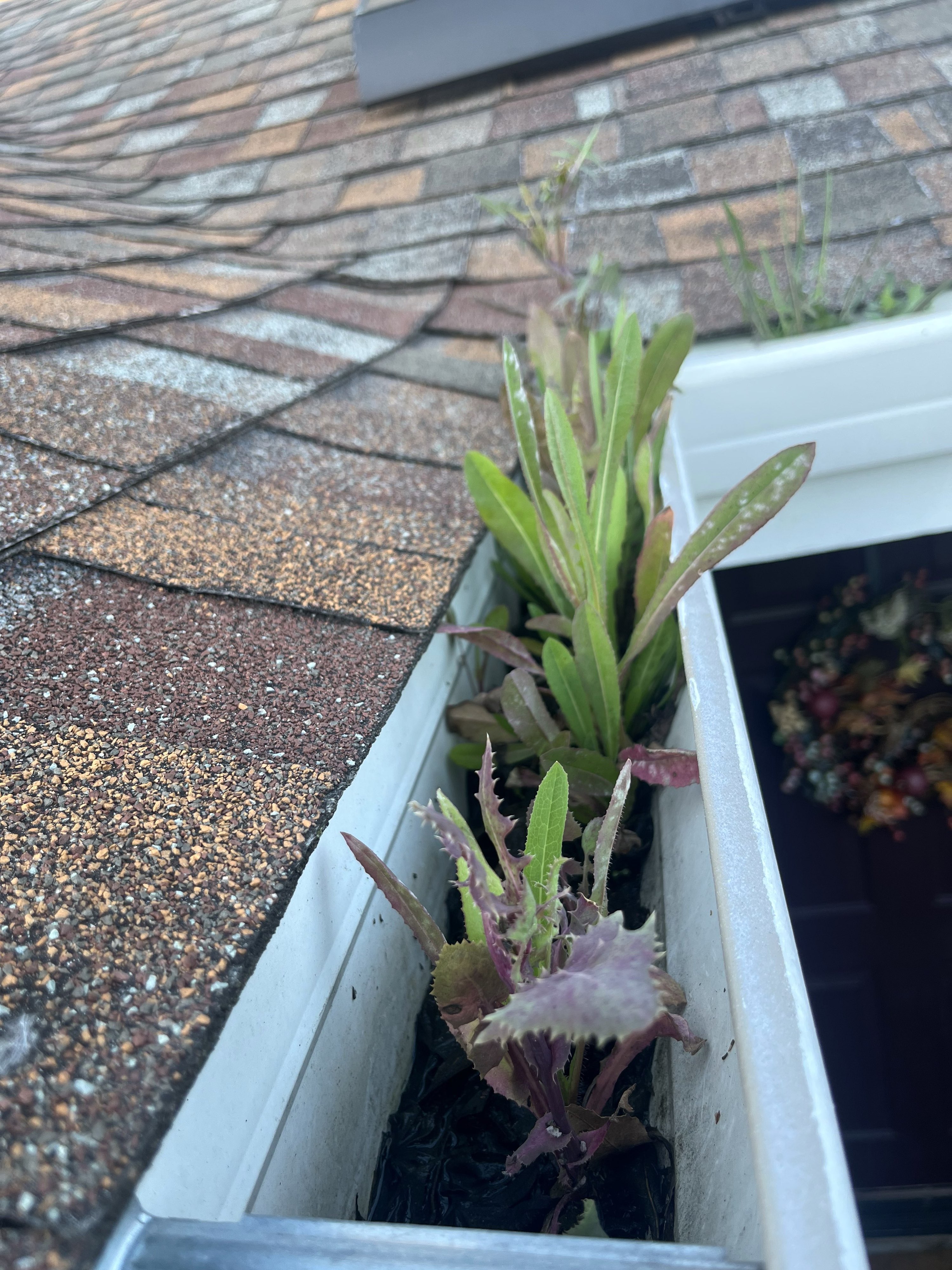
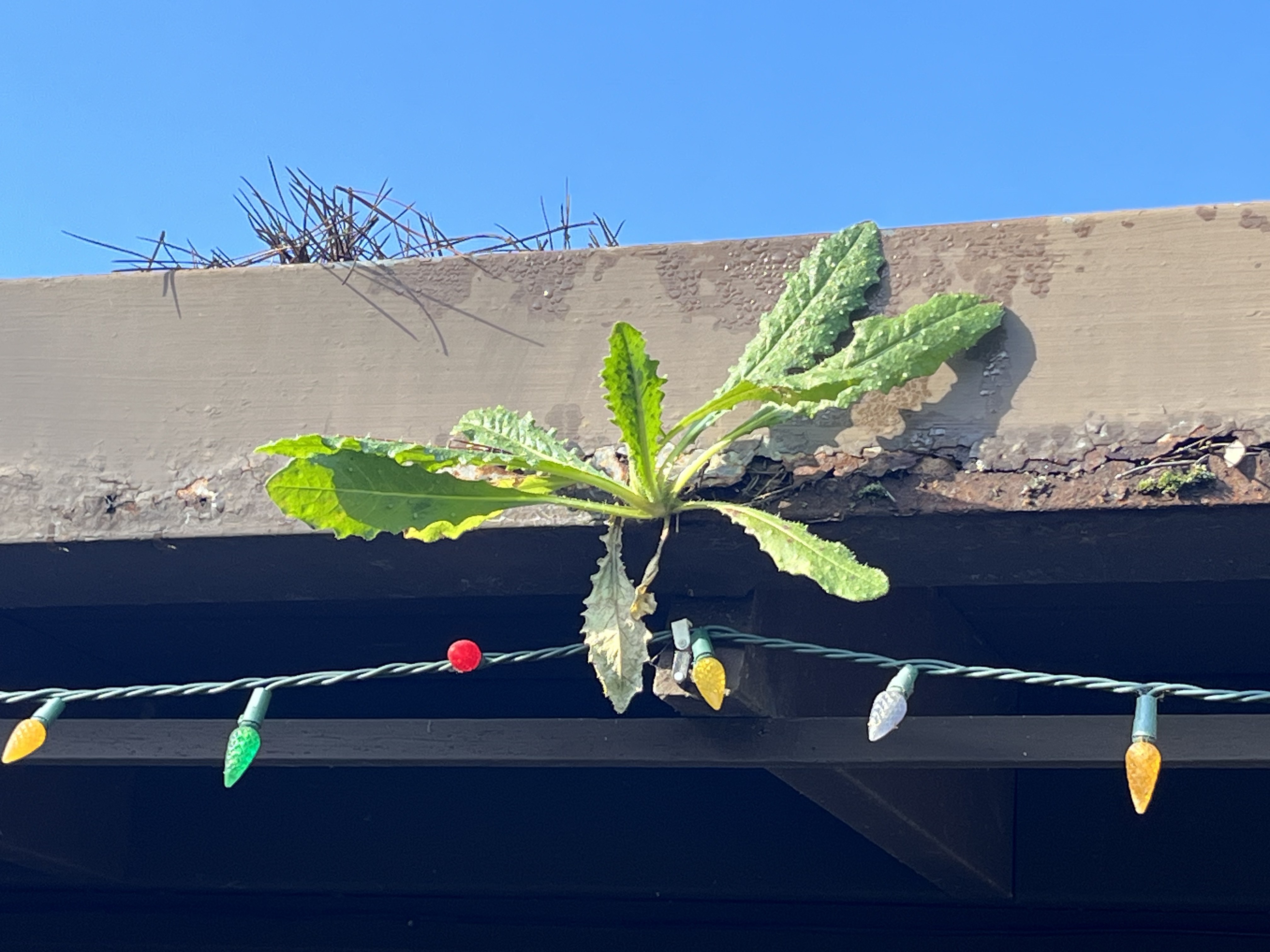
Plants growing inside a gutter are the most photographed finding in the entire library — and the one homeowners are most often surprised by. Two factors create gutter plants. The first is a layer of decomposing organic debris deep enough to hold moisture and act as soil. The second is a seed reaching that layer with enough water to germinate.
Both conditions are routine in NorCal. Conifer needles, oak catkins, and bay laurel leaves break down into a black sludge floor by the second wet season. Wind-dispersed seeds — dandelion, common ragweed, ornamental escapees — find that floor every spring.
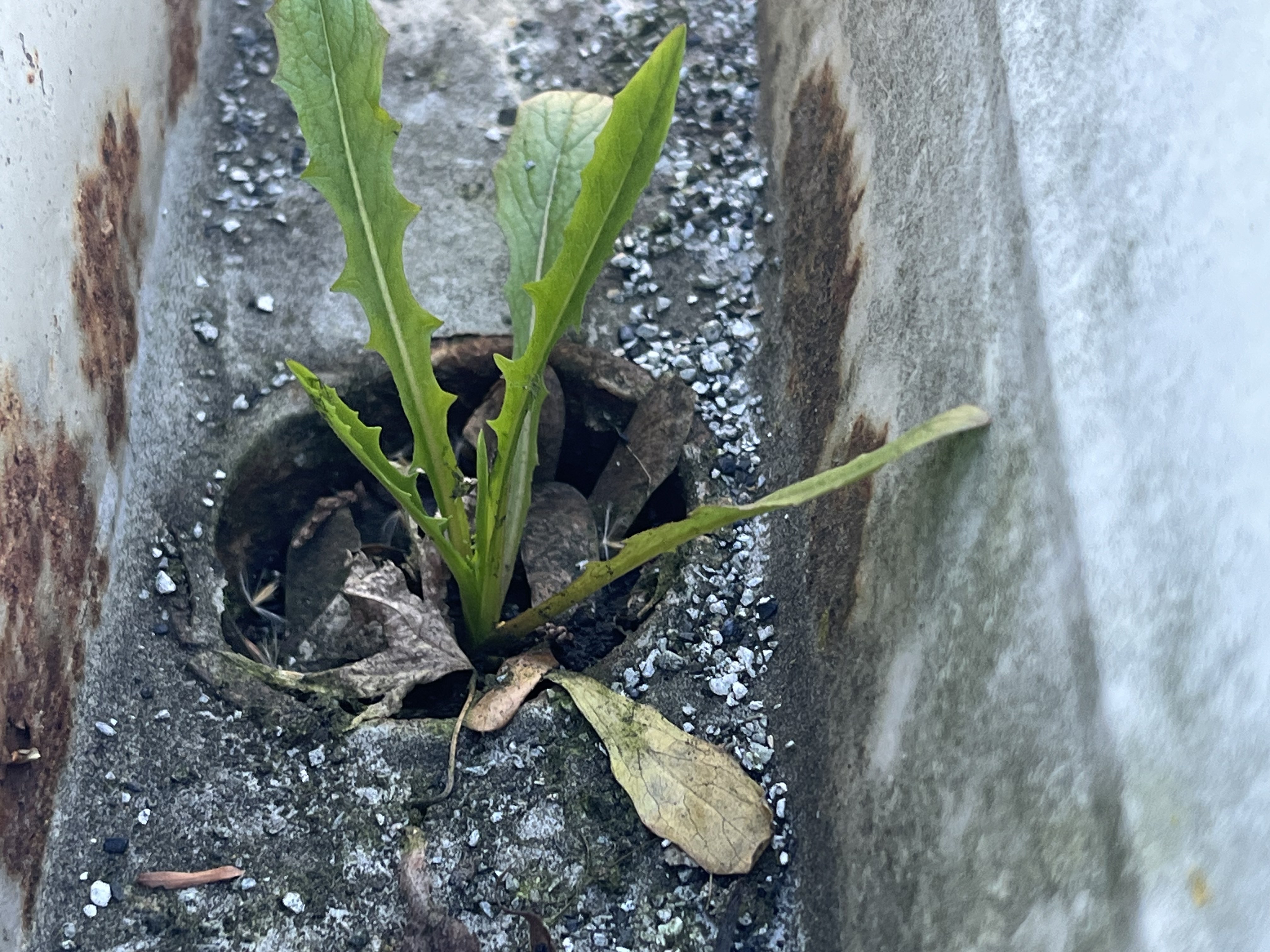
The plant most likely to show up first is grass. The plant most likely to be visible from the street is dandelion. The plant that signals the worst structural condition is anything woody — meaning a seedling has rooted long enough for a stem to lignify, which takes two seasons in NorCal climate.
If the plants are above the gutter line and visible from your driveway, the channel itself filled in years ago.
Dandelion Seeds (Pre-Tenants)
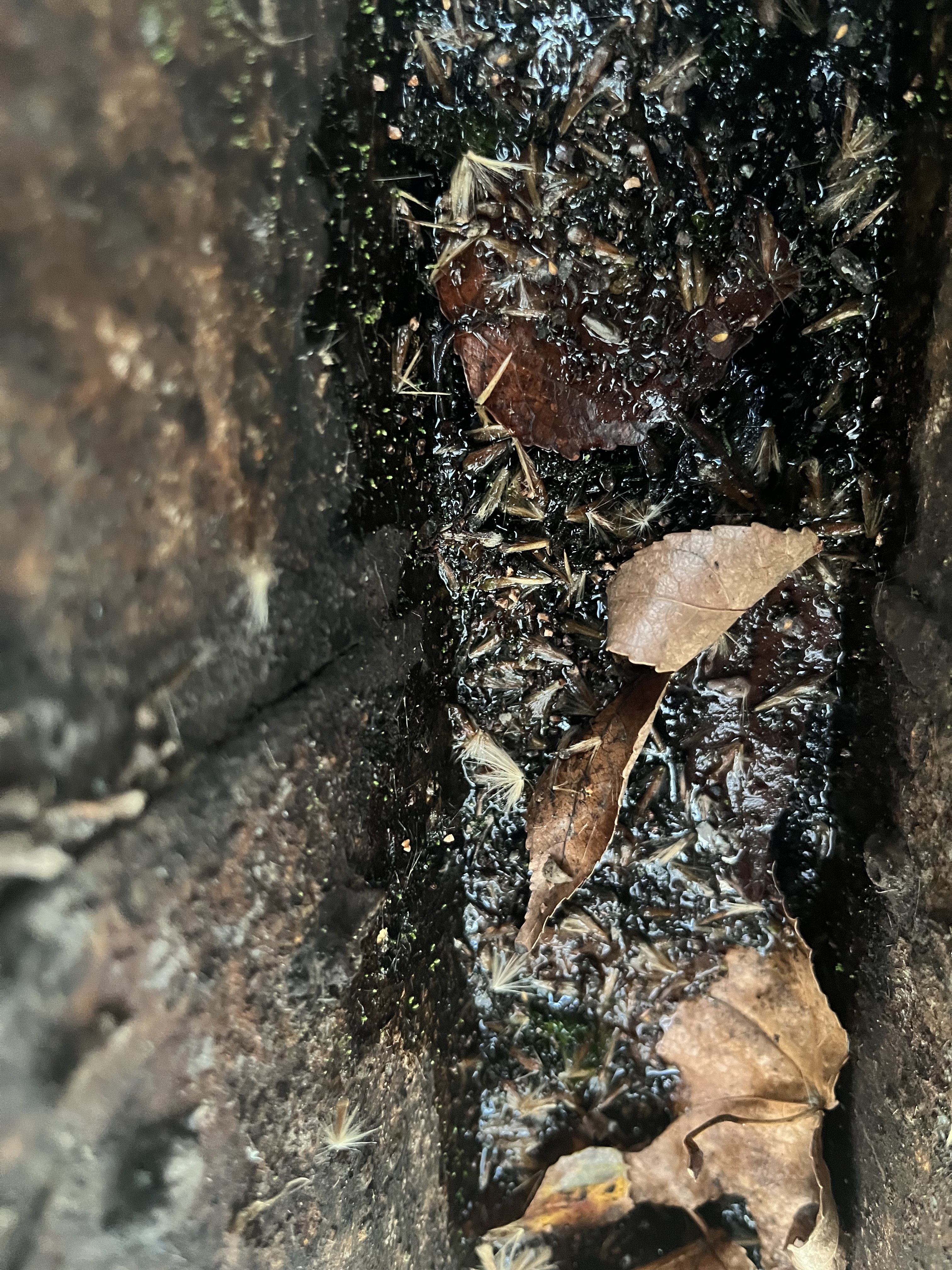
Before the plants are plants, they are the parachute seeds floating across your yard in May. Dandelion seeds in particular have a feathered pappus engineered for soft landings — and a wet gutter sludge floor is one of the softest, most fertile landings available on a Northern California property.
Finding seeds in a gutter is finding next season's plants in advance. A spring inspection that catches the seed deposition is a different conversation than a late-summer inspection that catches the visible blooms — but the underlying gutter condition is the same. The sludge floor that the seeds need is the same sludge floor that creates the moisture problem behind the gutter.
Algae on the Back Wall
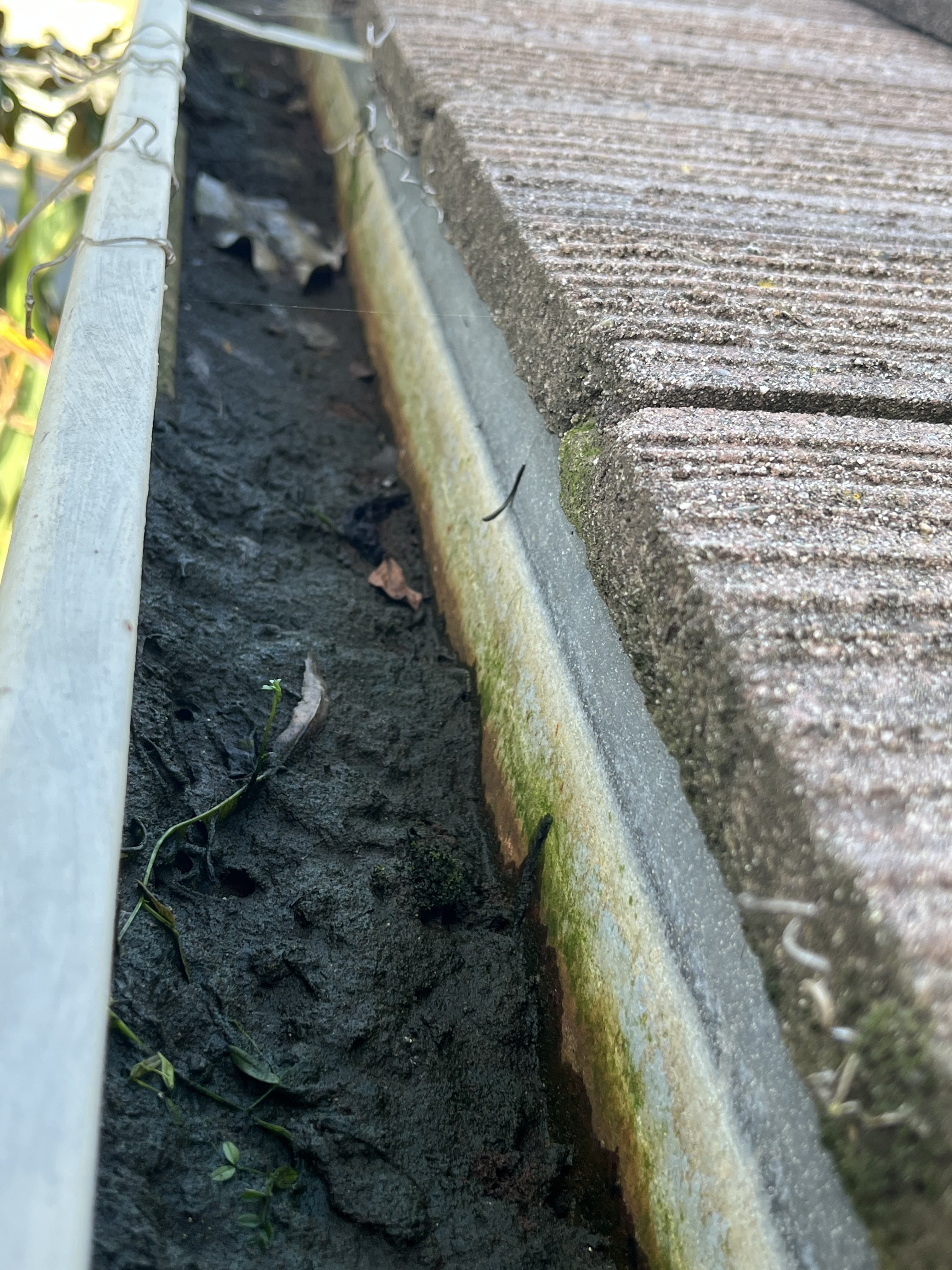
Algae is the wet-season tenant that does not move. It does not climb, fly, or migrate — it colonizes, slowly, on whichever surface stays moist long enough. Inside a Northern California gutter, that surface is almost always the back wall, at the height where standing water reaches in the wettest weeks of the year. Algae draws a green stripe at exactly that waterline and leaves it there as a record.
The diagnostic value of an algae stripe is precision. The stripe tells you the maximum standing water level in your gutter — without you needing to be there during the storm to see it. It also tells you the moisture has been there long enough for biology to take hold, which means weeks of wet season at minimum, often years.
What makes algae the most useful wet-season tenant on this list is what it sits in front of. Your fascia is directly behind that algae stripe, taking the same moisture exposure the algae is responding to. The algae is the visible half of a story whose expensive half is happening in the wood behind it.
Birds (Mostly Their Leftovers)
Birds rarely live in NorCal gutters — but they routinely use them as staging zones, drinking pools when standing water sets in, and dropping points for whatever they are carrying. Scrub jays in spring drop oak galls and acorn fragments. Mockingbirds and starlings in late summer pack the corners with grass blades and small twigs as nesting precursors that often do not finish into actual nests.
The diagnostic value of bird material in a gutter is what they brought from where. Acorn fragments mean an oak within thirty feet. Pine needles in volume mean a conifer is dropping into the run, even if you never see it from the ground. Bird leftovers map the trees on your property whether you have inventoried them or not.
Active nests — meaning the bird is still using the gutter — are uncommon and almost always partial. The full nests show up in downspouts more often than in the channel itself.
Wasps Under the Joints
Paper wasps build small comb nests in the dry, sheltered space directly under gutter joints and behind the front lip — particularly on the south-facing runs that warm up earliest in the morning. The nests are small. The hazard, if there is one, is that the inspector finds them at the wrong moment, not that the wasps are doing damage to the gutter itself.
Wasp residency tells you the joint is dry inside — meaning either the gutter is functioning properly at that section or the run has been failing for so long that water is bypassing the channel entirely and going somewhere else. Both are worth knowing. The wasp doesn't care which one is true.
Squirrels Caching in Downspouts
Tree squirrels in NorCal cache acorns and walnuts wherever the geometry holds them, and the open mouth of a downspout is geometry that holds them. Find a half-cup of acorn fragments at the bottom of a downspout extension and you have located both the cache and the reason your downspout drains to soil instead of running clear.
The blockage is fall-specific. A spring inspection rarely sees this material — by then it has either been cleared by water pressure or has decomposed into the broader sludge inventory below. October and November inspections catch it intact and give you the seasonal explanation for why the downspout was running fine in August and is overflowing now.
Reading the Inventory
Every tenant on the list is a sensor. Spiders measure flow. Plants measure depth of debris. Seeds predict next year. Algae marks your wet-season waterline. Birds map your trees. Wasps confirm dry pockets. Squirrels date your downspout blockage to a specific season.
Reading the inventory is what an inspection actually does. Climbing the ladder is the access. The reading is the report.
The Tenants Are Easy to See.
The Damage They Cause Is Not.
A free inspection identifies which tenants are in your gutters, what they are telling you about your flow rate, and what condition the channel underneath is in — and you get a written report the same day with photos of every finding.
Schedule a Free InspectionThe next time you walk past your gutter line, look up. You may not see a tenant. But the conditions that bring them in have either set up by now or have not — and you will recognize the difference.
What lives in your gutter is reading your gutter for you. The work is learning what they read.