Two things are true about your part of Northern California. The first is that redwood and bay laurel are everywhere. The second is that most gutters in the region were specified without either tree in mind.
The trees themselves are not the problem. The chemistry their fallen material releases as it sits in your gutter through a wet season is the problem — and the chemistry behaves differently against galvanized steel, aluminum, and stainless. If your house has any of these three trees within thirty feet of the roof line, your gutter is participating in regional chemistry whether anyone planned for it or not.
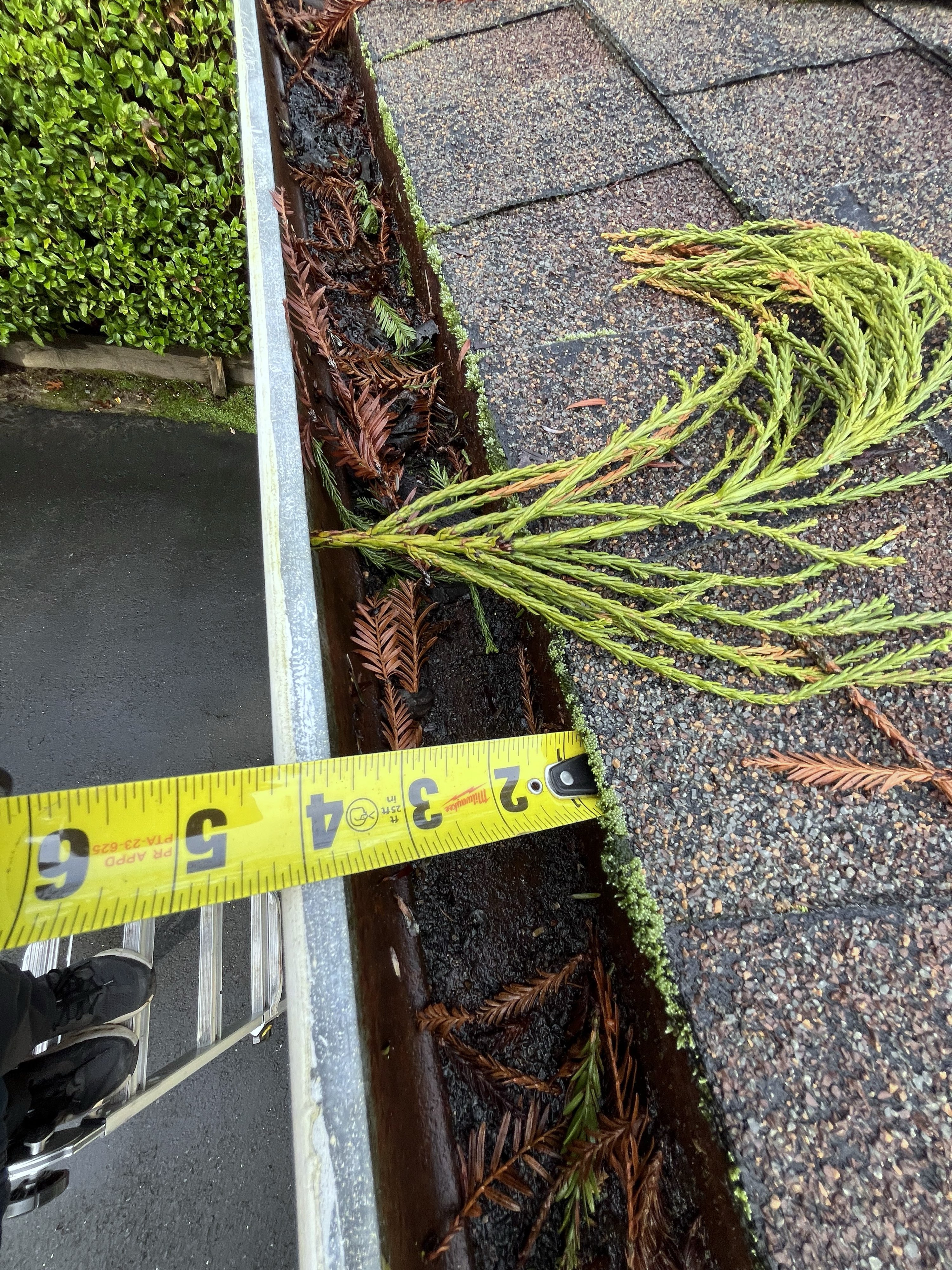
The trees come first. The chemistry comes second. The damage to the metal comes third. Reading any of the three is the field work.
Redwood and Tannic Acid
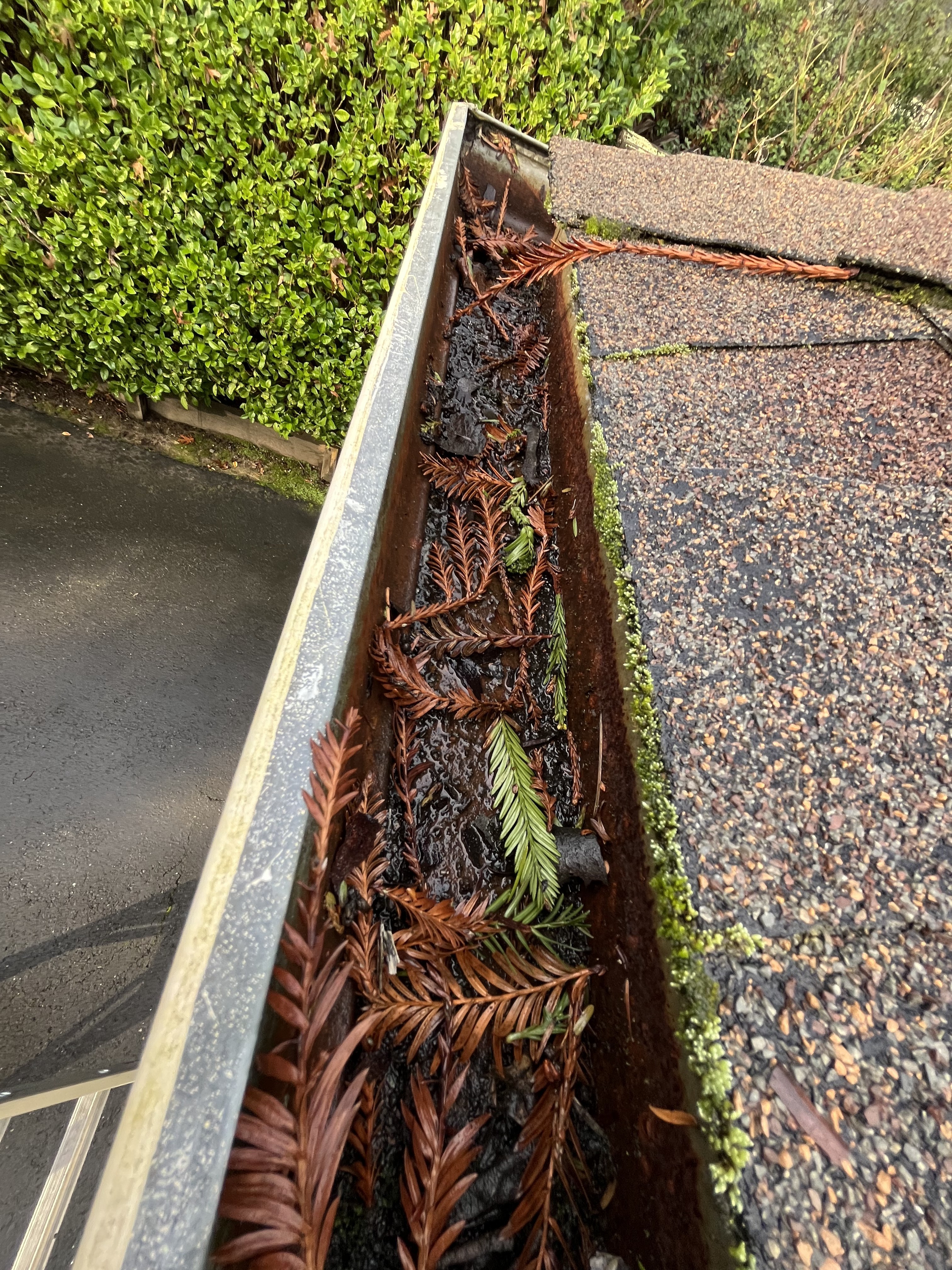
Redwood drops fronds — small needle-bearing twigs — onto your roof and into your gutter year-round, with the heaviest drop in late summer when the tree sheds older growth. The fronds themselves are physically benign. What happens to them once they reach your gutter floor is the chemistry.
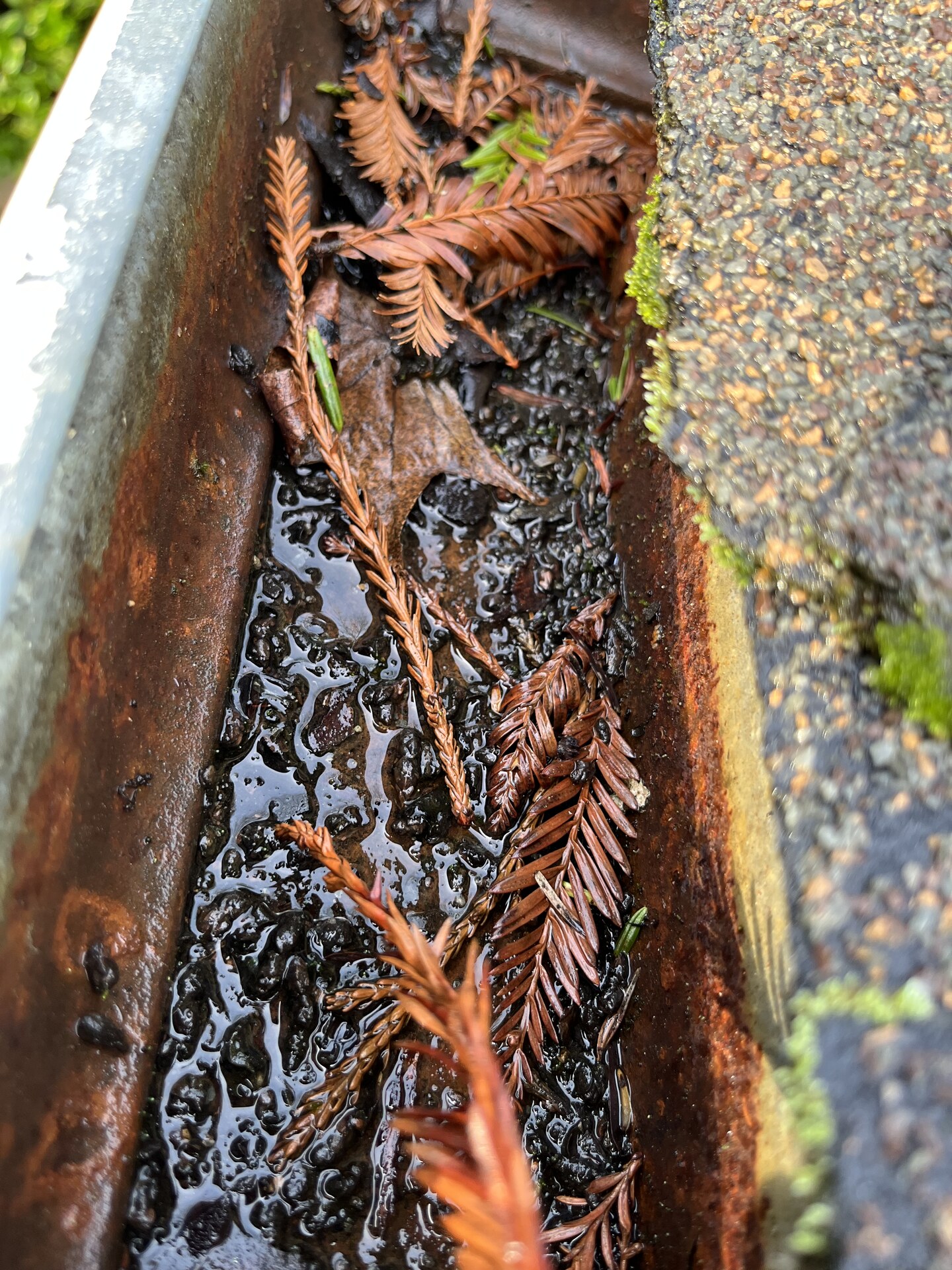
Decomposing redwood releases tannic acid. In a dry environment, the acid breaks down quickly and disperses. In your gutter — wet, dark, sealed against airflow at the back wall — the acid concentrates. The pH inside a redwood-fed gutter floor in NorCal field samples runs noticeably acidic, and the acid sits in direct contact with the back wall of your gutter for the duration of the wet season.
If your gutter is galvanized steel, tannic acid penetrates the zinc coating and oxidizes the steel underneath, producing the back-wall rust streaks you see in the photo above. If your gutter is aluminum, the acid pits the metal in small spots rather than running it. The same tree, two different damage patterns, depending on what your gutter was built from.
Bay Laurel and Aromatic Oils
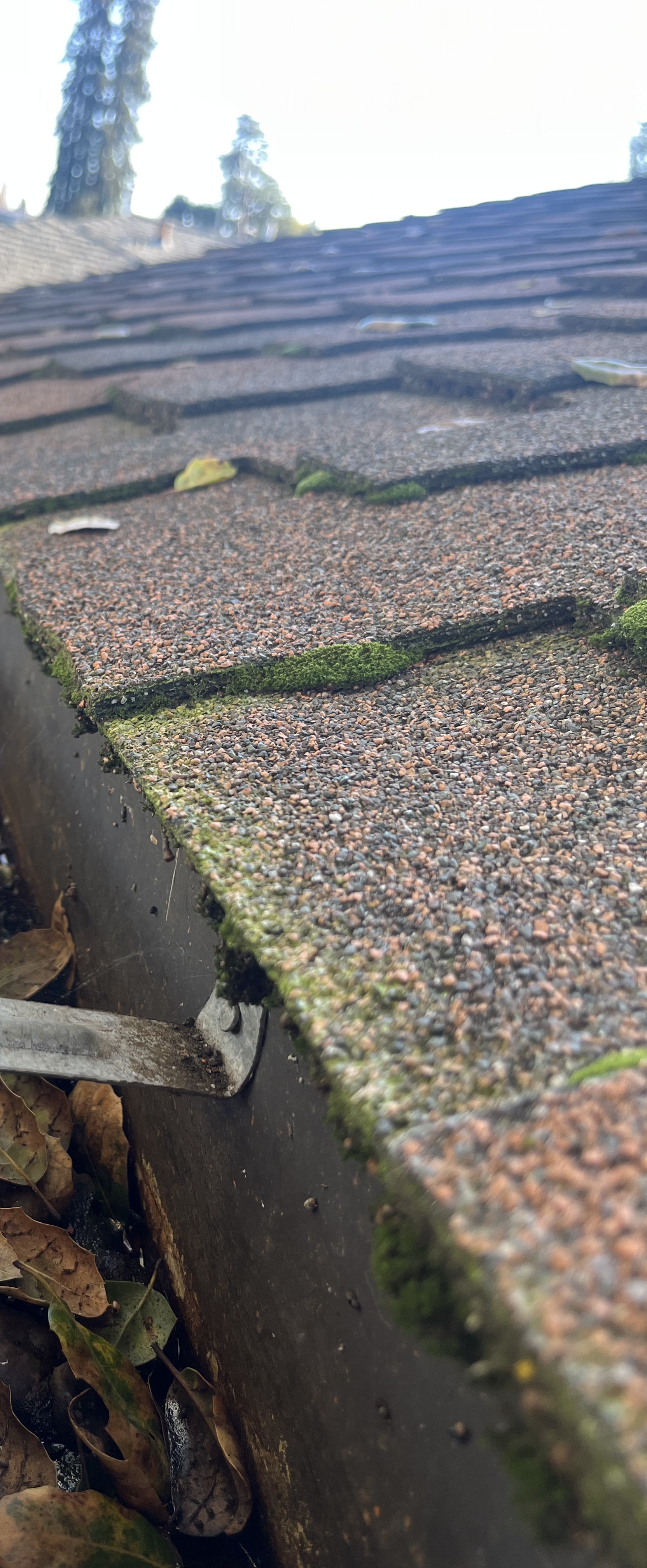
Bay laurel — California bay, the same tree whose leaves you find in cooking — drops thick, leathery leaves into your gutter year-round, with the heaviest drop in spring after the tree pushes new growth. The leaves are slow to decompose because of the same aromatic oils that make them useful in cooking — eucalyptol, methyleugenol, and related compounds.
Those oils are unusual in two ways. First, they coat the gutter floor with a hydrophobic film that prevents normal drainage — water beads on top of bay laurel debris instead of soaking through and clearing. Second, when the oils finally break down, they produce mildly acidic byproducts that attack metal differently than tannic acid does. The damage pattern is less rust on the back wall and more pitting on the gutter floor, often concentrated in the corners where bay laurel leaves accumulate.
The diagnostic give-away of bay laurel residency is the smell — fresh bay laurel debris in your gutter has a distinct herbal scent for the first few weeks. If a gutter cleaning ever produces leaves that smell like bay seasoning, your gutter has been hosting bay laurel chemistry.
Alder and Volume
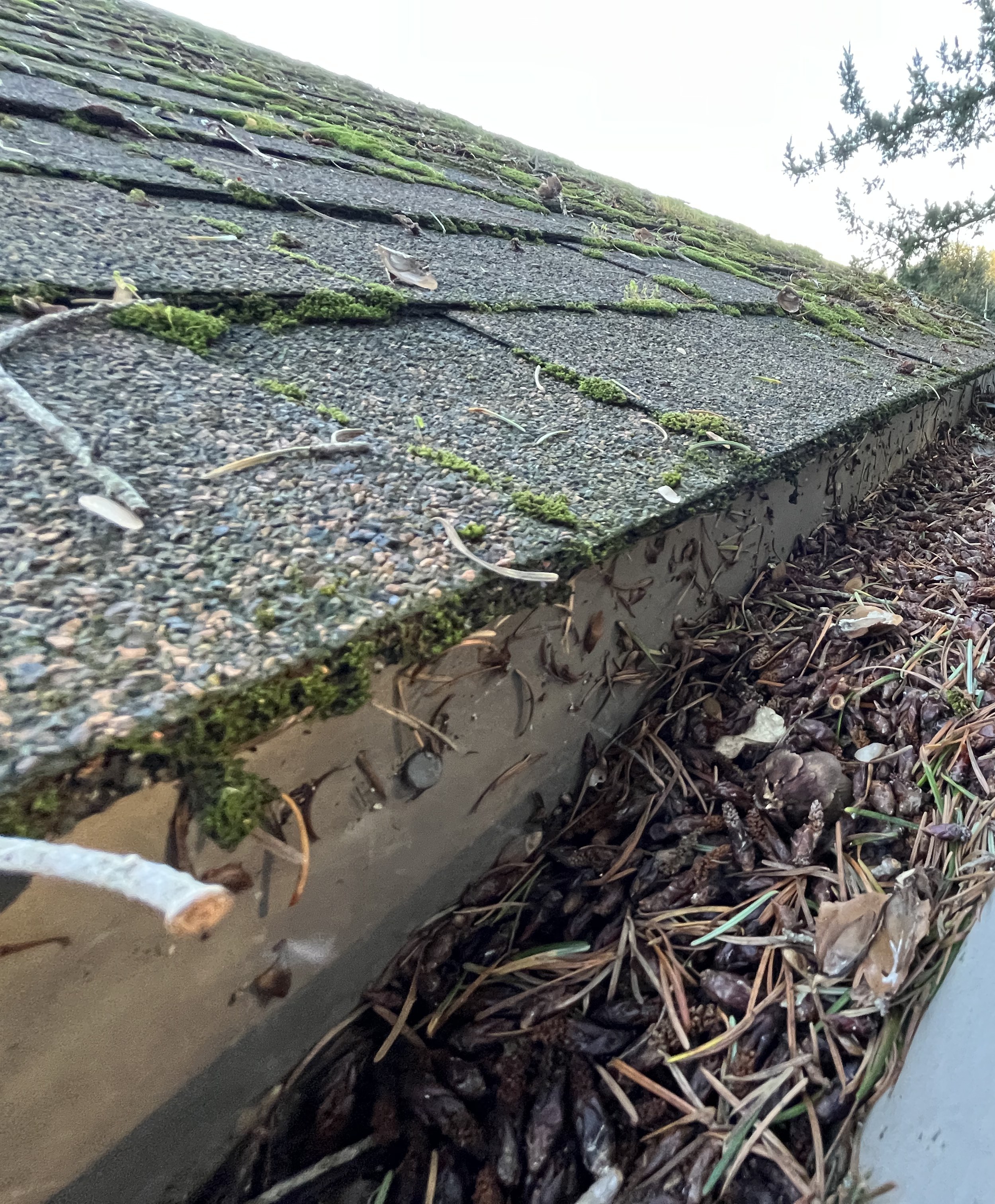
Alder is the third regional tree most NorCal homeowners do not think about — and the one that drops the most material by volume into a single short window. In late winter and early spring, alder produces catkins (the dangling pollen-bearing structures) that fall in massive quantities over a few weeks. A gutter under an alder can fill several inches deep in a single catkin drop.
Alder chemistry is milder than redwood or bay laurel. The leaves and catkins decompose normally, with no unusual acids or oils. What alder does is volume — the sheer mass of debris stays packed in your gutter long enough to retain moisture against the back wall through the entire wet season, which is when the secondary chemistry begins. Standing water + decomposing organic material + months of contact = the same back-wall rust and aluminum pitting other species cause through different mechanisms.
If you have an alder within thirty feet of your roof line, your gutter sees one big catkin event each year. If you also have a redwood or bay laurel, the alder catkins become the carrier for the more aggressive species' chemistry — they hold the moisture that the others need to do their work.
How Galvanized, Aluminum, and Stainless Each Respond
Three metals show up in NorCal gutters, and each one responds to regional tree chemistry differently.
Galvanized steel — the most common older-installation gutter material — is steel coated with zinc. The zinc protects the steel until something penetrates the coating. Tannic acid from redwood penetrates zinc reliably; bay laurel oil byproducts do it more slowly; alder volume creates the moisture that lets either of them work. The damage pattern is back-wall rust streaks, gutter-floor pitting, and eventual perforation. Galvanized gutters in heavy NorCal tree environments typically show meaningful rust within seven to ten years.
Aluminum — the most common newer-installation material — does not rust the way steel does, but it does pit and oxidize. Tannins and acids leave small dark spots on the metal that grow into shallow craters over time. Aluminum's failure mode is slower and more cosmetic until the pitting goes through-thickness, which can take fifteen to twenty years in a heavy-tree environment.
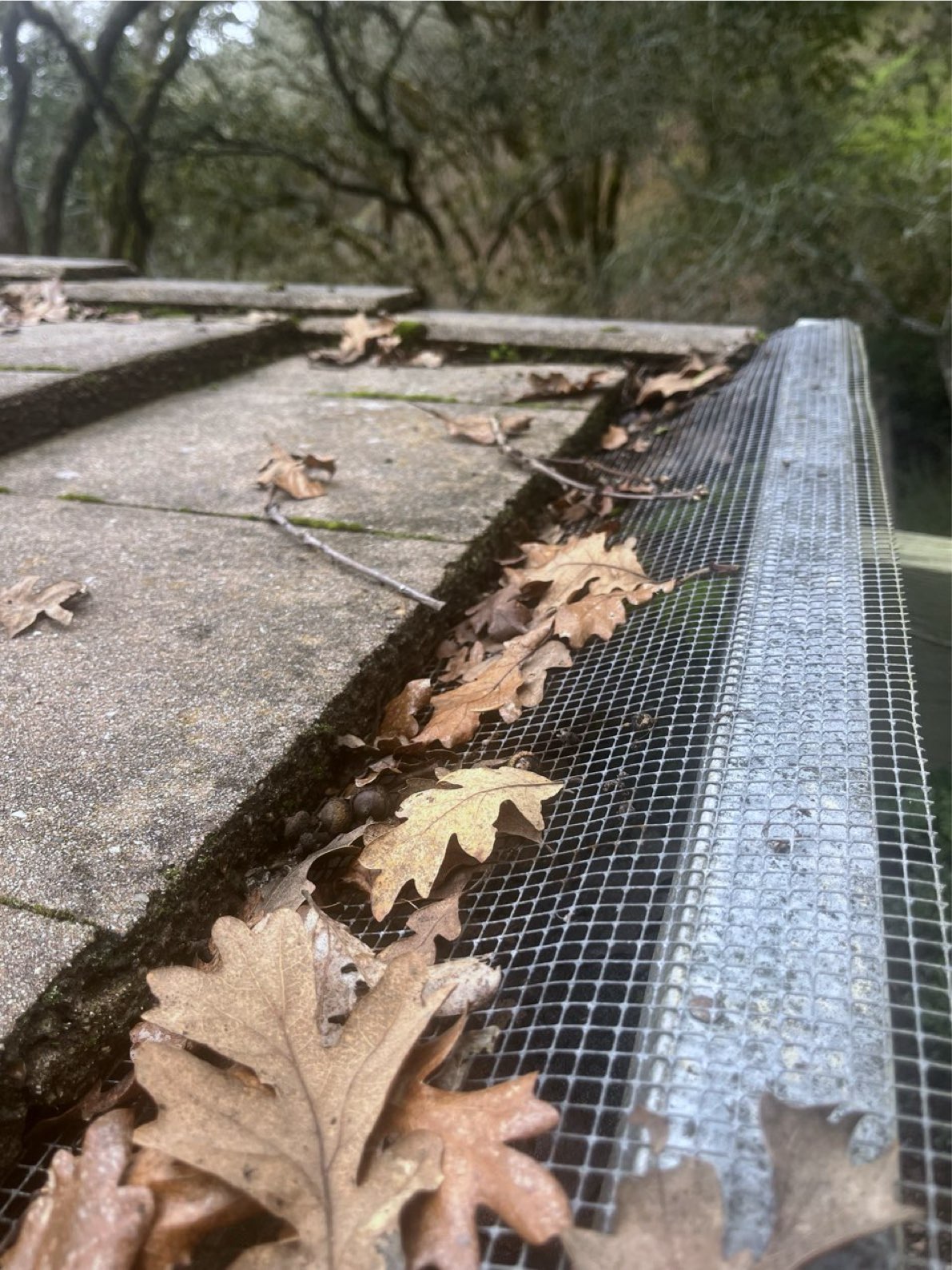
Stainless steel — particularly 316 marine-grade — handles regional tree chemistry better than either. Tannins do not penetrate the chromium oxide layer. Aromatic oils do not pit it. Volume still creates blockages, but the metal itself stays largely intact. Most NorCal homes do not have stainless gutters because of cost, but the chemistry case for them is strongest in heavy redwood and bay laurel environments.
The Trees Are Above the Gutter.
The Damage Is Inside It.
A free inspection identifies the trees feeding your gutter, what their chemistry has done to your specific metal, and how many seasons of damage are already on the back wall — and you get a written report the same day with photos of every finding.
Schedule a Free InspectionThe trees on your property are older than your house. The gutters were specified at one moment in time, often without the tree inventory in mind. The chemistry has been running ever since — every wet season, every year, on whichever metal happens to be there.
Looking up is where it starts. Reading what the metal already tells you is the next step.