The fascia board behind your gutter is one of the most expensive predictable failures in residential exteriors — and you cannot see any of it from the ground.
Your fascia is the horizontal wood your gutter is bolted to. Two inches of it are visible. The other six inches sit behind the back wall of the gutter, where moisture has been working on it for years before anyone looks. By the time your fascia announces itself — by the gutter pulling away from the house, by paint blistering above the line, by water finding its way into your soffit — the wood has been doing the work of failing for a long time already.
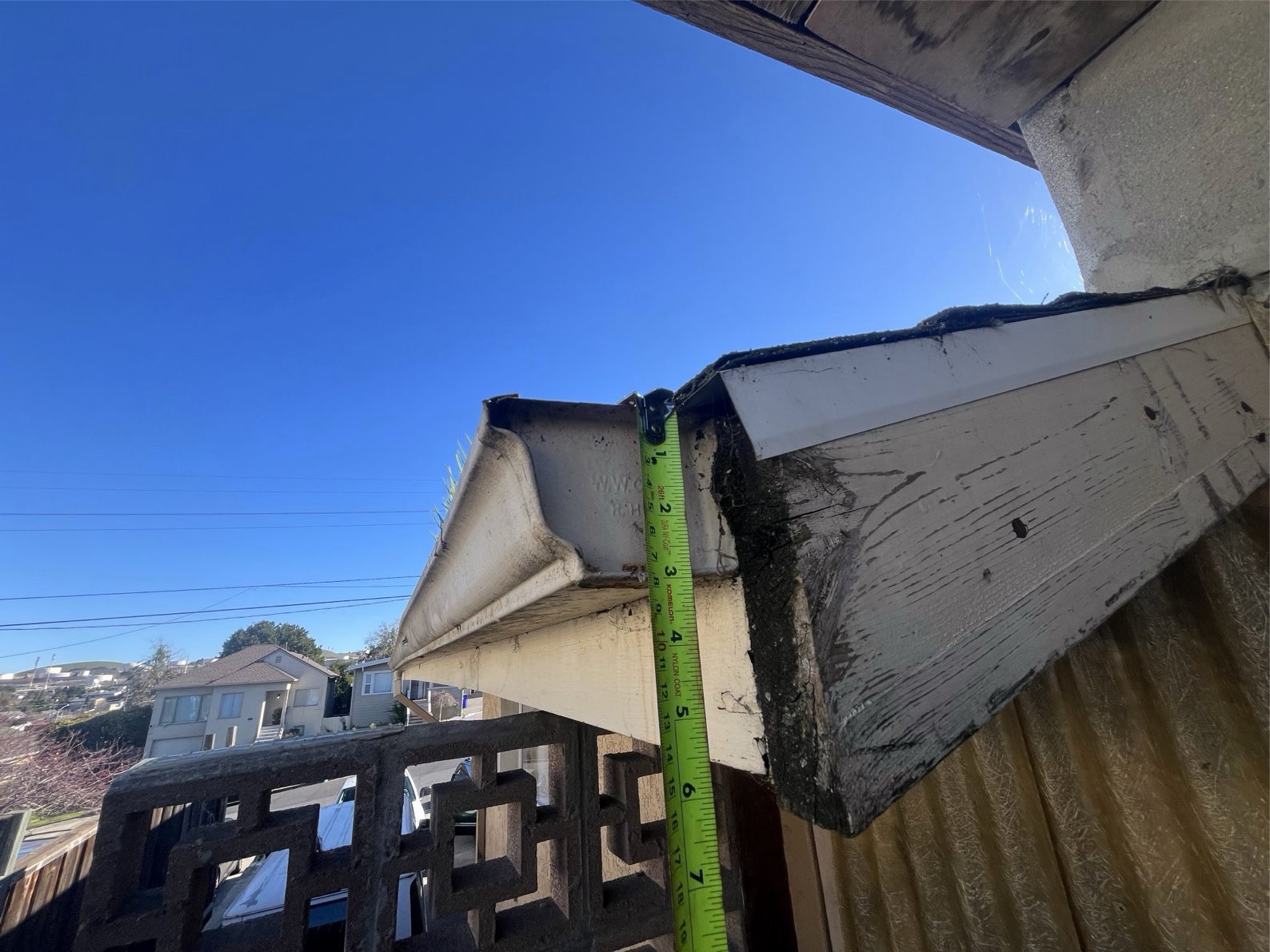
What follows is the three-stage progression a fascia board moves through, the price tag on each stage, and the four warnings your house has been giving you that you can verify from your own yard this weekend.
Soft Wood Behind a Wet Gutter
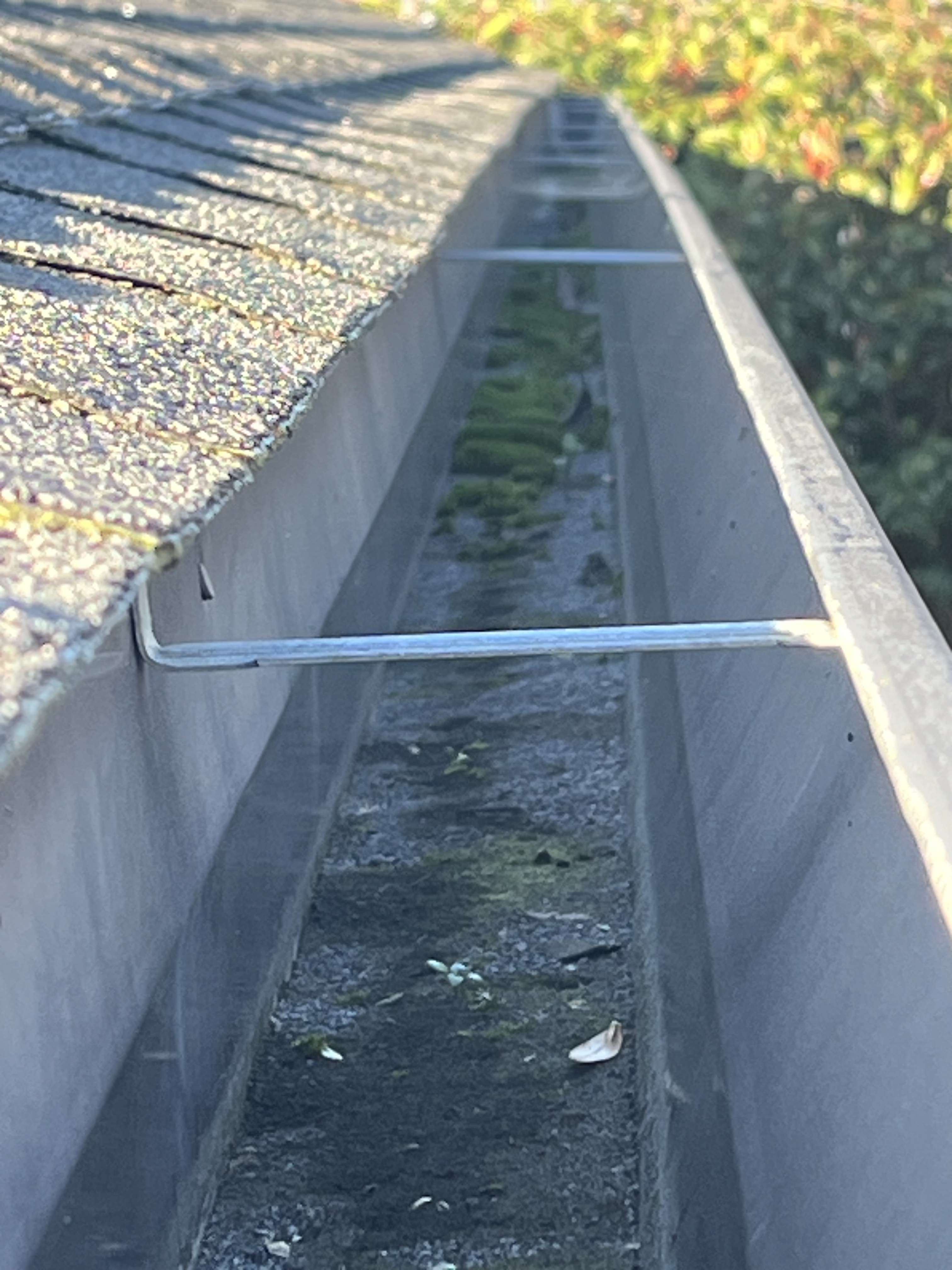
Stage one is what an inspector documents — and what a homeowner cannot see. The back wall of your gutter develops a continuous moss or algae waterline. The fascia sitting behind that wall is being held in moisture contact long enough for the surface fibers of the wood to soften, but no visible damage has occurred yet from any angle.
The mechanism is simple. A gutter that is supposed to hold water inside its channel and drain it through the downspout is leaking water along its back wall instead — through a seam, through a hanger penetration, through the natural capillary path between gutter back and fascia. The leak is small. The duration is years. The wood is patient.
Stage one is fixable as gutter work — re-seating brackets, sealing seams, sometimes a flashing repair. Your fascia is wet. Your fascia is not yet rotten. The price gap between catching it here and catching it at stage two is roughly a factor of ten.
Stained Wood and Mounting Failures
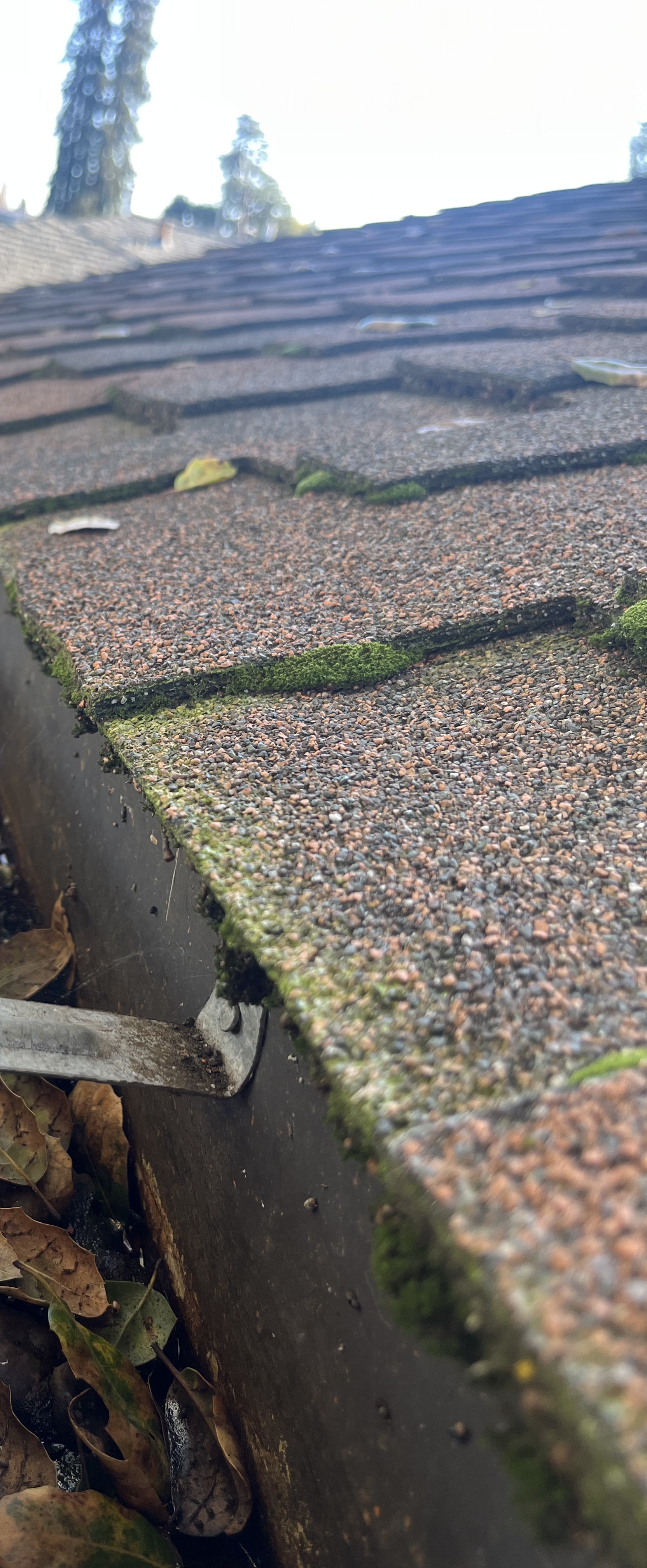
Stage two is when your gutter starts giving you the first ground-visible signal. The hangers — the brackets that hold the gutter to the house — begin loosening, tilting, or pulling out of the fascia. The wood they were anchored into has rotted enough that it can no longer hold a screw. Your gutter sags slightly between bracket points. Paint above the gutter line begins blistering or peeling.
At this stage, removing the gutter exposes brown-stained wood with a soft fibrous surface. A screwdriver pushes into the fascia with light hand pressure. The rot has not gone all the way through — there is still structural wood underneath — but the outer inch is compromised. Repair now means replacing sections of fascia, not the whole run.
The four signals your house gives you at this stage are visible from the ground: paint blistering or peeling on the trim board above the gutter, hangers visibly tilted or spaced unevenly, the gutter line sagging in any spot between brackets, and a darkened band on the wood directly above the gutter where the paint film has lifted.
The Gutter Comes Off the House
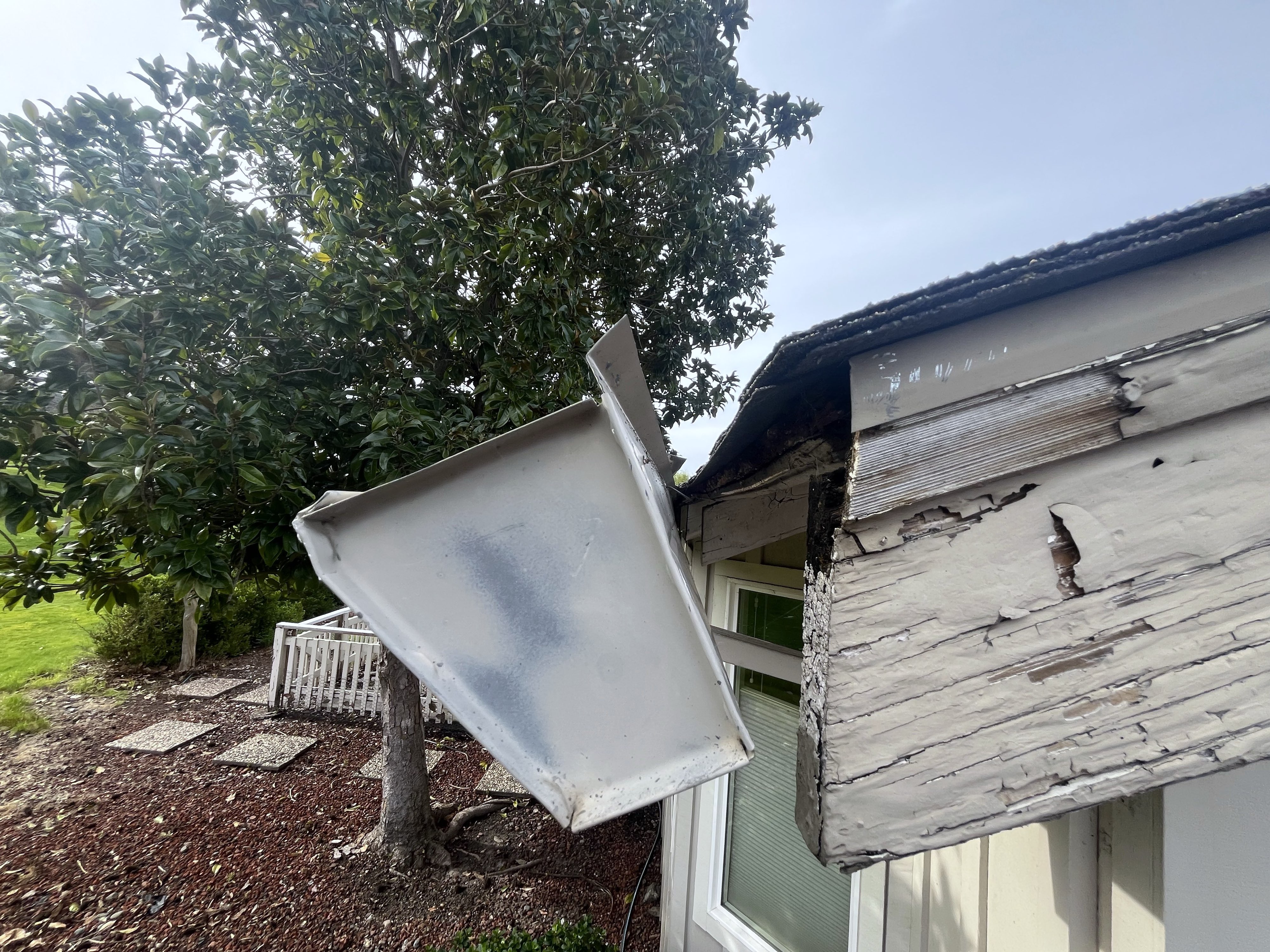
Stage three is the photograph above. The gutter has detached. The fascia board is visibly rotten — black, soft, fibrous, and in some places completely missing where the wood has crumbled away. Water has been entering the soffit cavity behind the fascia for at least one wet season. Roof framing or rafter tails may be starting to take damage.
Repair at this stage is not gutter work and not paint work. The fascia is replaced — usually the full run, sometimes the rafter tails behind it, sometimes a section of soffit. New gutter hangers cannot be installed until the new wood goes up. The work involves carpentry, painting, gutter reinstallation, and often interior repair if the soffit damage has reached the wall cavity.
Every stage three failure was a stage two failure six months earlier and a stage one finding three years before that. The math on catching this earlier is not subtle.
The Geometry That Hides The Damage
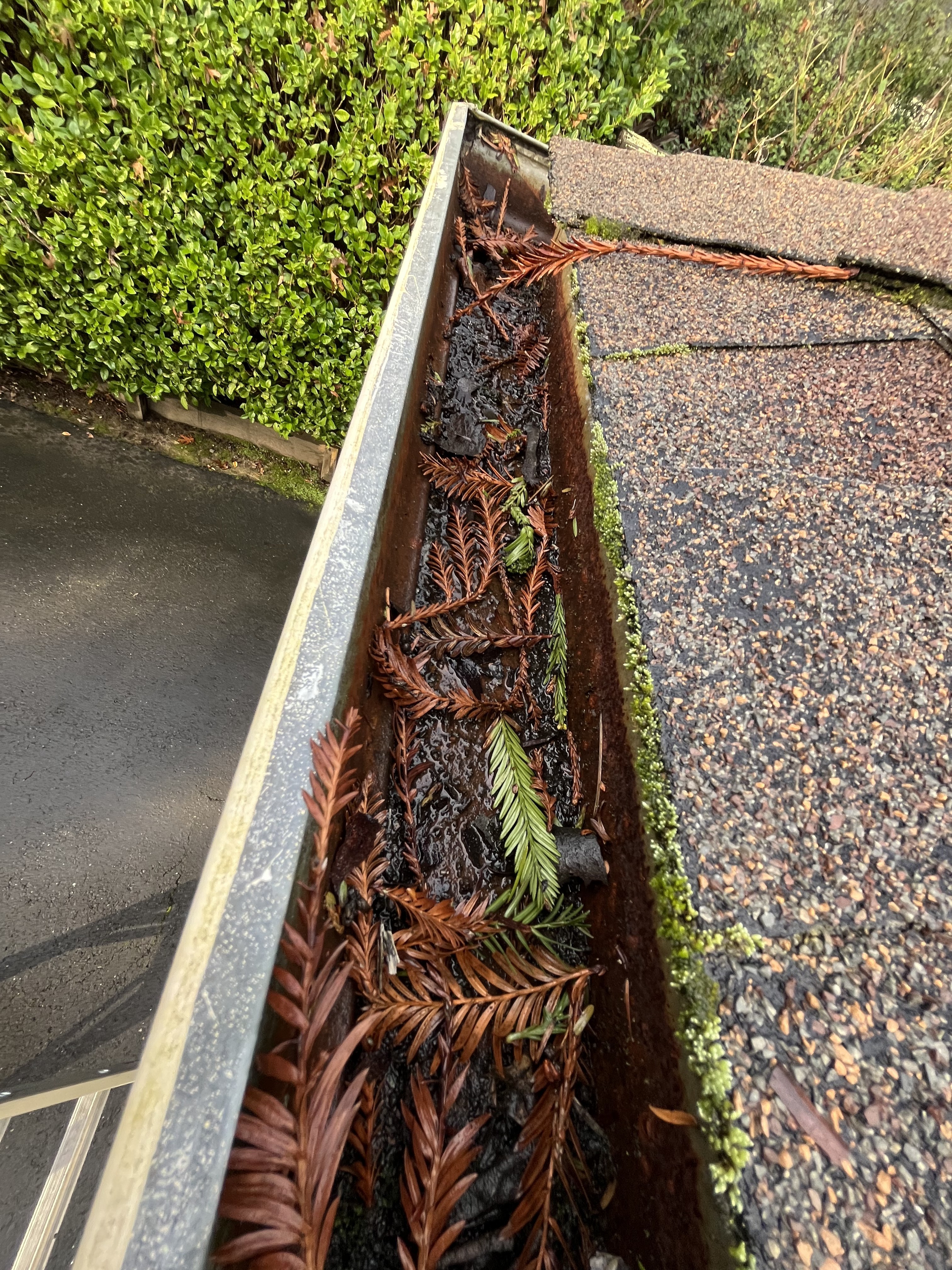
Your fascia rot stays hidden because of the geometry. The visible portion of your fascia — the bottom two inches — is the dry, painted, exposed face. That two inches looks fine on most homes. The damage is happening to the upper six inches, behind the gutter, where moisture residency is constant and the wood is unpainted on the back side.
Stage one is invisible because the failure is moisture, not yet wood. Stage two is partially visible — paint and hardware tell on themselves — but most homeowners read the symptoms as paint problems or hardware problems and treat them as cosmetic. Stage three is unmissable, because the gutter has fallen off, and by then the work is structural.
The reason your fascia rot is the most expensive predictable failure in residential exteriors is that the prediction is exactly that — predictable. Every homeowner whose gutter is going to detach from the house in five years is reading stage one signals from the ground today. Most homeowners do not know what they are reading.
The Damage Is Invisible.
The Inspection Is Free.
A free inspection reads the back wall of every gutter on your home, documents fascia condition behind every section, and gives you a written report the same day with photos and the rot stage named — before the next wet season writes the next chapter.
Schedule a Free InspectionThe wood behind your gutter has been writing a story since the day your house was built. Most of that story is still being written in stage one — moisture residency, surface softening, the long slow patience of water. The four signals at the end of this piece are the chapters you can read for yourself before stage two arrives.
Your fascia is sitting behind your gutter right now. Knowing what is happening to it is the work.